Nearly 21 million American adults will have a major depression episode this year. About a third of them won’t get relief from standard medication.
If you’re reading this in Scottsdale, AZ, you probably already know what that looks like up close. Maybe it’s the third prescription that barely moved the needle. Maybe it’s telling your therapist you feel “fine” because explaining the fog again feels exhausting. Finding the right psychiatrist for depression can change that, and it often starts with treatments most people have never heard of until they need them.
Sadness gets all the attention, but it’s rarely the main event. More often it’s a loss of interest in things that used to matter. Your guitar sits untouched for months. You skip the birthday dinner you’d normally look forward to. Friends start asking if you’re okay, and you say yes because the real answer takes too much energy to explain.
Symptoms of depression show up in the body too: sleep that won’t cooperate, appetite that disappears or spikes, a concentration span that used to get you through a workday and now can’t survive a phone call. Some people notice physical aches with no clear cause. Others feel foggy, like their thoughts are moving through syrup.
Depression also tends to travel with other medical conditions. Chronic pain, heart disease, autoimmune issues, even thyroid problems can mimic or worsen depressive symptoms. That overlap is one reason a diagnosis can take longer than people expect, and why mental health professionals who dig into the full history, not just a symptom checklist, tend to catch what a rushed visit misses.
Roughly one in three people with major depression don’t respond well to standard drugs, even after trying several at the right dose for long enough. Psychiatrists call this treatment-resistant depression, and it carries an unfair stigma. Patients often blame themselves for it, wondering if they’re just not trying hard enough or not being honest enough in therapy.
You didn’t do anything wrong by not responding to prescribed medication. Brain chemistry isn’t one-size-fits-all, and neither is treatment. Some patients cycle through five or six SSRIs before anyone suggests a different category of treatment altogether. That delay costs time nobody wants to lose while struggling through daily life.
The good news: there’s depression treatment Scottsdale, AZ residents can access that goes beyond another round of pills. Newer options target depression through completely different biological pathways, which matters a great deal if the old pathways just aren’t responding.
Spravato treatment uses esketamine, a nasal spray related to ketamine, and it works on glutamate receptors rather than the serotonin pathway most antidepressants target. For some patients, that translates into mood changes within days instead of weeks. Spravato for depression Scottsdale patients have tried after years of standard treatment often describe it as the first thing that actually shifted something, sometimes after a single session.
It’s not something you take home. Sessions happen in-office under supervision, usually about two hours total, including observation time afterward, since blood pressure and dissociative side effects need monitoring. Spravato gets paired with an oral antidepressant and often with talk therapy, not used alone. The dosing schedule typically starts twice a week for the first month, then tapers to weekly or biweekly maintenance sessions.
How fast does it work? It varies. Some people notice a shift after their first couple of sessions. Others need several weeks before the effect really builds. Side effects can include temporary dizziness, nausea, or a floaty feeling that fades within the two-hour observation window, which is exactly why the in-office setup matters.
Spravato earned FDA-approved status in 2019 for treatment-resistant depression, and later for depression with suicidal thoughts. Getting there took years of clinical trials involving thousands of patients who hadn’t responded to standard antidepressants.
That approval comes with structure. Spravato falls under a federal safety program called REMS, which means only certified psychiatrists can prescribe and administer it, and only in approved settings equipped to monitor patients afterward. You won’t find it at a walk-in clinic or through a telehealth prescription. It’s the kind of care that requires an actual depression psychiatrist Scottsdale patients can see regularly, not a one-off visit followed by a mail-order refill.
Spravato isn’t the only option on the table. Transcranial magnetic stimulation (TMS) uses magnetic pulses to stimulate mood-regulating regions of the brain, no medication involved. TMS therapy typically runs five days a week for several weeks, and most patients handle it fine, aside from mild scalp discomfort during sessions. Unlike Spravato, there’s no observation period afterward. Patients drive themselves home and go about their day.
Some patients ask which is better, TMS or Spravato. There isn’t a universal answer. TMS tends to suit people who want to avoid medication side effects entirely, while Spravato often gets chosen when faster relief matters, or when a patient’s depression includes suicidal ideation that needs a more immediate response.
Plenty of psychiatrists pair Spravato or TMS with cognitive behavioral therapy (CBT). The biological treatment shifts brain chemistry. CBT gives you tools to actually catch and redirect the thought spirals that keep depression fed, things like all-or-nothing thinking or catastrophizing setbacks. Neither piece does the whole job alone, which is exactly why they get combined so often in a well-built treatment plan.
Expect a real evaluation up front, not a checklist. A psychiatrist for depression will ask about past medications, family history, sleep patterns, and how your mental health conditions have changed over time. Some patients also get screened for co-occurring anxiety, since the two often overlap and treatment usually needs to address both.
From there, your psychiatrist will map out a treatment plan built around your specifics, whether that’s starting Spravato, trying TMS therapy, adjusting your current prescription, or adding CBT into the mix. Cost and insurance coverage come up early in this process too. Many insurance plans now cover Spravato and TMS for patients who meet the criteria for treatment-resistant depression, though prior authorization is often required.
Plans shift. What helps in month one might need adjusting by month three, and that’s normal. A psychiatrist who stays involved after the first prescription, checking in, tracking symptoms, adjusting dosages, tends to get better long-term results than one who sets a plan and disappears.
Scottsdale TMS treats treatment-resistant depression with evidence-based methods, including Spravato treatment and TMS therapy, delivered by mental health professionals who take the time to understand your history instead of rushing to a prescription pad. Our providers walk you through every option before recommending one, and we adjust as your response to treatment becomes clear.
We know how draining it is to try treatment after treatment and come up short. Our depression treatment Scottsdale, AZ program pairs FDA-approved options with cognitive behavioral therapy when it fits, all built around you rather than a generic protocol. If major depression has had the upper hand for a while, one conversation is usually where things start to turn.
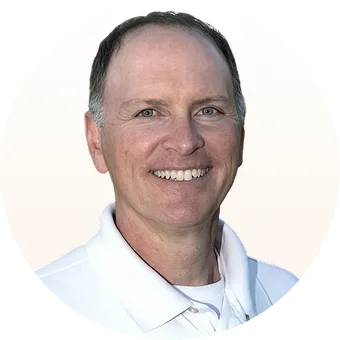
Dr. Vines has practiced psychiatry in Arizona for for over 25 years and has experience working with diverse populations that include children, adolescents, adults, geriatrics, SMI patients, and the chemically dependent.
September 7, 2026