
Deep TMS is a form of transcranial magnetic stimulation that uses an H-coil, worn in a padded helmet, to stimulate a broader and deeper area of the brain than the figure-8 coil used in standard TMS. Both are FDA-cleared, non-invasive treatments for depression and other conditions.
This page covers how the two coil designs differ, what the evidence shows, and what to ask before starting either type of treatment.
Deep TMS is a transcranial magnetic stimulation technique developed by BrainsWay that uses a helmet-mounted H-coil instead of the figure-8-shaped coil used in standard TMS. The H-coil’s shape is designed to reach further into the brain and cover a wider area with each magnetic pulse.
Standard TMS, sometimes called rTMS for repetitive transcranial magnetic stimulation, has been FDA-cleared for depression since 2008 and uses a flat, figure-8-shaped coil positioned against the scalp. Both approaches work the same basic way: magnetic pulses stimulate underactive nerve cells in the prefrontal cortex, a brain region involved in mood regulation.
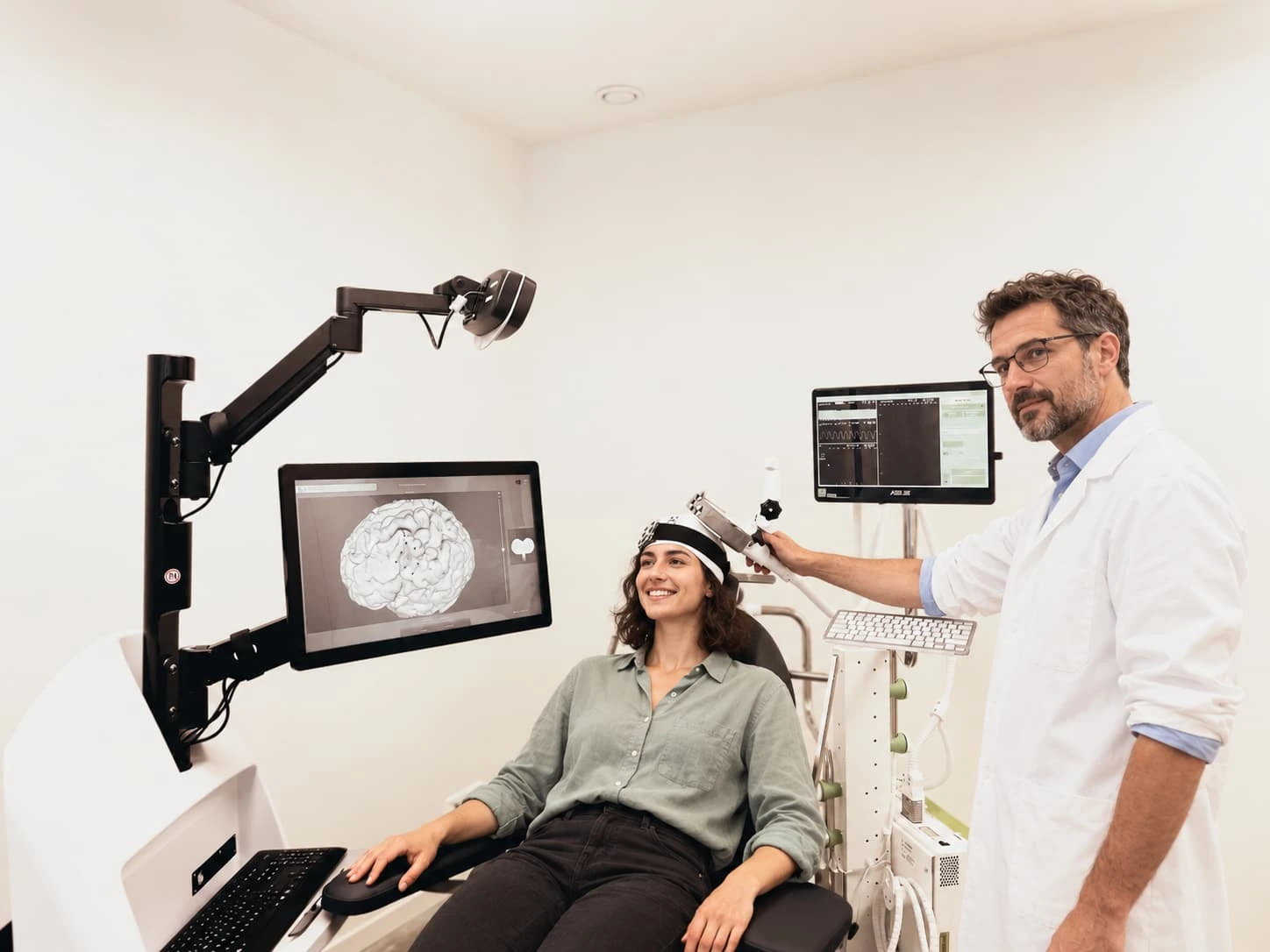
Deep TMS vs rTMS comes down to coil design, not a different underlying technology. Deep TMS reaches deeper and stimulates a larger volume of brain tissue than standard TMS because of the coil shape rather than the underlying magnetic principle.
According to BrainsWay’s own published comparison, its H1-coil reaches roughly 3.2 centimeters into the brain, compared to roughly 0.7 centimeters for a standard figure-8 coil, and stimulates a substantially larger volume of tissue in the process.
That difference in reach is the entire distinction between the two. Neither approach uses medication, anesthesia, or sedation, and patients remain awake and alert during sessions with both.
The evidence on whether Deep TMS outperforms standard TMS is mixed, not one-sided. An independent systematic review and meta-analysis comparing figure-8-coil and H1-coil studies found a larger reduction in depression severity favoring H1-coil (Deep TMS) studies, but a slight trend toward higher remission rates favoring figure-8-coil (standard TMS) studies (PMC systematic review).
A separate randomized clinical trial comparing the two coil types directly in major depressive disorder found a better response rate and greater reduction in depression severity with the H1-coil, with no significant difference in remission rate between the two groups (Journal of Psychiatric Research).
Response and remission are measured differently: response means a meaningful reduction in symptoms, while remission means symptoms have dropped below the threshold for a depression diagnosis.
The same meta-analysis reported seizures in some pooled H1-coil studies and none in the pooled figure-8-coil studies. Seizure risk with any form of TMS is rare, but it is a confirmed possible side effect that should factor into a decision between coil types, alongside effectiveness.

Deep TMS holds separate, device-specific FDA clearances beyond the original 2008 clearance for the TMS category. BrainsWay’s H1-coil was cleared for major depressive disorder in January 2013.
Its H7-coil was cleared as an adjunct therapy for obsessive-compulsive disorder in August 2018, and its H4-coil was cleared for smoking cessation in adults in August 2020, the first FDA clearance for a TMS device in the addiction space.
Each of these is a “cleared” designation, not “approved.” TMS devices go through the FDA’s 510(k) clearance pathway for medical devices, which is a different regulatory process than drug approval.
There are 5 things to check before going for the TMS treatment:
Scottsdale TMS Therapy provides FDA-cleared TMS therapy under the oversight of Dr. Michael Vines, MD, a board-certified psychiatrist with 25+ years of experience, and outlines what that treatment involves and the evidence behind it on its own site. A full course of TMS therapy typically ranges from $2,000 to $12,000. Insurance coverage varies, and many major insurers now recognize TMS as a covered benefit.
If you are weighing Deep TMS against standard TMS for your own treatment, ask the clinical team at Scottsdale TMS Therapy which approach fits your diagnosis and history during a consultation. Call (480) 841-9279 to schedule one.
If you are in crisis, call or text 988.